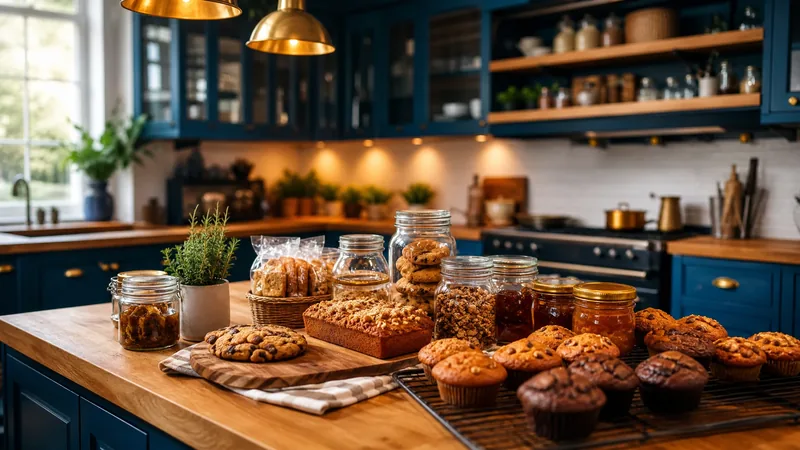
Iowa Cottage Food Law: Do You Need a License?
Last verified: November 25, 2026
If you bake, can, or package food at home and want to sell it in Iowa, the first question is whether you need a state license at all. The answer depends on what you make, how you sell it, and who receives it. Iowa Code chapter 137F contains the cottage food exemption, and it comes with conditions that decide whether your product qualifies.
This guide walks through those conditions, the license that replaced the old home bakery license, and the rules for farmers markets and temporary events. Each step tells you what to check and what to do with the answer. Where this guide does not cover a point, it names the agency to confirm with.
Short Answer: When Cottage Food Is Exempt from Licensing
Iowa Code 137F.20(1) says cottage food is exempt from all licensing, permitting, inspection, packaging and labeling laws of the state if the producer sells and delivers it directly to the consumer. Delivery can include mail or an agent of the producer, such as an employee. The exemption depends on the product and on the sales route, so you need to check both.
According to IASourceLink's Iowa Business License Information Center, the state of Iowa does not have a 'general' business license. The Iowa Economic Development Authority's Opportunity Iowa page for the same center says licensing and other compliance requirements are based on the nature of a business or professional occupation. IASourceLink is a service of the Center for Business Growth and Innovation at the University of Northern Iowa, not a state agency, so confirm the wording at its link before you rely on it.
The exemption applies when all four of the following conditions are met, as DIAL's cottage food guidance lists them:
- The food is prepared in a private residence.
- The food does not require temperature control for safety.
- The food is sold directly from the producer to the consumer.
- The food is properly labeled.
What Cottage Food Excludes
Some products stay outside the exemption even when you make them in your own kitchen. DIAL says cottage food excludes any food that must be kept hot or cold for safety. It also excludes milk or milk products regulated under Iowa Code chapter 192, and meat or poultry products regulated under Iowa Code chapter 189A.
Check your recipe against these groups before you do anything else. If a product fits an excluded group, the cottage food steps below do not apply to it. Confirm its licensing path with DIAL before you sell.
What You Need Before You Start
Gather these items before you work through the steps. Most of them are information about your own product and sales plan.
- A written recipe for each product, with every ingredient listed so you can put them on the label in descending order.
- The common name for each product and a list of any allergens it contains.
- Your name and contact information as the producer.
- For home-canned pickles, vegetables, or fruits, a pH meter or water activity meter, and containers you can label with the date produced and canned.
- The label wording from Iowa Code 137F.20(2), including the exact required sentence.
- A sales plan that says whether you will sell directly to customers, by mail, or at a farmers market or temporary event.
Step-by-Step: Deciding Whether Cottage Food Applies
Work through these steps in order. If a step rules out your product or sales plan, stop there and move to the license section later in this guide.
Step 1: Confirm Your Product Does Not Need Temperature Control
Read your recipe and ask whether the product must be kept hot or cold to stay safe. Cottage food does not cover any food that requires temperature control for safety. A product that needs refrigeration or hot holding to be safe falls outside the exemption.
Step 2: Rule Out Milk, Meat, and Poultry Products
Check whether the product contains a milk or milk product regulated under Iowa Code chapter 192, or a meat or poultry product regulated under Iowa Code chapter 189A. If it does, the cottage food exemption does not cover that product. Remove it from your cottage food line instead of trying to relabel it.
Step 3: Confirm Every Sale Goes Directly to the Consumer
The exemption requires that you sell and deliver the product yourself. Iowa Code 137F.20(1) allows delivery by mail or through an agent of the producer, such as an employee. A wholesale or resale arrangement does not match the direct-to-consumer condition as the statute describes it, so confirm any such plan with DIAL before you start.
Step 4: Check Where You Plan to Sell
DIAL's cottage food guidance says the only food establishments where cottage foods can be sold are temporary food establishments operated by the producer. DIAL's farmers market page also lists cottage foods among the items that can be sold without a farmers market establishment license. Read these pages before you choose a venue, and confirm with DIAL how they apply to your plan.
Step 5: Set Up a Compliant Label
Every cottage food product must be properly labeled. Iowa Code 137F.20(2) requires the label to state the following sentence, and your wording should match it exactly: "This product was produced at a residential property that is exempt from state licensing and inspection."
The same section requires your name and contact information, the common name of the product, ingredients in descending order, and an allergen statement. For home-canned pickles, vegetables, or fruits, the label also needs the canning date. A label missing any of these elements does not meet the labeling condition, so check each element on every label before you sell.
Step 6: Measure Home-Canned Products Before Selling
Home-canned pickles, vegetables, or fruits can be cottage food only if the product has a pH value of 4.60 or lower, or a water activity of .85 or lower. DIAL says each batch must be measured with a pH or water activity meter, so test every batch rather than relying on an earlier one.
Each container must also be labeled with the date produced and canned. Build that date into your labeling routine so it appears on every container.
When You Need a Home Food Processing Establishment License
If your product or sales fall outside the cottage food exemption, the license most relevant to a home kitchen is the Home Food Processing Establishment (HFPE) license. DIAL says the HFPE license replaces the home bakery license, which no longer exists. The license costs $50 a year.
Iowa Code 137D.2(1) says a person may not operate a home food processing establishment until the license is obtained from the department, and that the department collects a fee of fifty dollars. Plan to pay the fee for each year you operate under the license.
The HFPE license has a sales limit. Iowa Code 137D.1(3) defines a home food processing establishment by gross annual sales of less than $50,000. Treat $50,000 as a figure you must stay under, not a figure you can reach.
Step 1: Confirm Your Sales Stay Below the Ceiling
Estimate your gross annual sales across all of your channels and compare the total with the sales limit above. If your projections come close to that level, confirm how DIAL applies the limit to your business before you apply.
Step 2: Complete Food Safety Training
DIAL says the operation must have a team member who completes food safety training. Assign that training before you apply. This guide does not cover which training courses qualify, so confirm that with DIAL.
Step 3: Apply Online Through SAFHER
DIAL says all new and renewal applications are accepted online only through SAFHER, its food licensing system. Start on DIAL's food license application page and follow the online process from there.
Step 4: Expect Inspection of Your Preparation Area
Iowa Code 137D.2(5) says the department inspects only the areas of a home food processing establishment related to preparing food for sale. Keep the kitchen areas you use for production organized so the inspection focuses on food preparation.
DIAL says it inspects and licenses restaurants, bars, mobile food units, farmers markets, temporary food events and bakeries in 68 counties. It contracts with 10 local health departments for the other 31 counties, and it regulates food processing plants and warehouses in all 99 counties. Check DIAL's food inspection jurisdictions page to see which agency covers your county.
Iowa Code 137D.1(4)(b) describes made-to-order food that is regularly prepared and promptly served, delivered, or otherwise provided to a consumer immediately upon order and intended for immediate consumption. If your business works that way, check how the definition applies with DIAL before you assume it fits your operation.
Farmers Markets, Temporary Events, and Produce Stands
Iowa Code 137F.1(7) defines a farmers market as a marketplace which seasonally operates principally as a common market for Iowa-produced farm products. Check that definition and DIAL's farmers market guidance before you sign up for a market.
DIAL's farmers market page lists items that can be sold without a farmers market establishment license: whole uncut fruit and vegetables, cottage foods, fresh wholesome shell eggs, and honey. The same page gives the farmers market vendor license fee as $150 a year, to be filed at least three days before the event.
Produce-only stands are treated differently. Iowa Code 137F.1(9)(c) and DIAL's farmers market page treat stands selling whole, uncut fresh fruits and vegetables as outside food establishment licensing. Iowa Code 137F.1(9)(b) also excludes establishments offering only prepackaged foods that are not time/temperature control for safety foods.
For temporary food events, DIAL lists temporary food establishment fees of $50 per event or $200 annual, through its temporary food establishments and events page. DIAL also says a double license fee is collected for each food stand operating without the appropriate license. Confirm the event rules with DIAL before you set up.
Common Mistakes to Avoid
- Assuming the home bakery license still exists. DIAL says it no longer exists, and the HFPE license replaces it.
- Selling through a reseller. A wholesale or resale arrangement does not match the direct-to-consumer condition as the statute describes it.
- Using an incomplete label. A missing required statement, allergen statement, or ingredient order can leave the product outside the labeling condition.
- Skipping batch measurements. Home-canned pickles, vegetables, or fruits need a pH or water activity reading for each batch.
- Selling a product that needs temperature control. Those foods fall outside the cottage food exemption.
- Operating without a required license. DIAL says providing food without a license or permit is subject to a penalty equal to double the license fee.
- Treating state compliance as federal compliance. Iowa Code 137F.20(3) says compliance with the cottage food exemption does not represent compliance with federal law.
- Growing past the HFPE sales limit. The ceiling is below $50,000 in gross annual sales.
What to Expect When You Follow These Steps
Following these steps can help you determine which route may apply to your product and sales plan. A product that fits the cottage food exemption must meet every condition, including labeling and direct sales. If any condition is not met, the likely outcome is a different license path, and you should confirm it with DIAL.
The exemption will not answer every question. Iowa Code 137F.20(3) says compliance with the cottage food exemption does not represent compliance with federal law. Confirm any federal requirements for your product with the appropriate federal agency, and treat the state exemption as one part of your compliance picture.
What This Guide Does Not Cover
This guide does not cover local zoning rules for a home-based business. Confirm those with your City Clerk.
If your plan includes eggs, confirm the rules with the Iowa Department of Agriculture and Land Stewardship.
This guide also does not cover tax obligations. Confirm those with the Iowa Department of Revenue.
Frequently Asked Questions
Do I Need a License to Sell Cottage Food in Iowa?
Iowa Code 137F.20(1) exempts cottage food from licensing when the producer sells and delivers it directly to the consumer and the product meets the conditions in DIAL's guidance. If your product or sales route falls outside those conditions, the license question moves to the Home Food Processing Establishment rules or another license, and you should confirm the path with DIAL.
Is the Home Bakery License Still Available?
No. DIAL says the home bakery license no longer exists. The Home Food Processing Establishment license replaces it and costs $50 a year.
Can I Sell Cottage Food by Mail?
The statute allows it. Iowa Code 137F.20(1) includes delivery by mail or through an agent of the producer, such as an employee, within direct delivery. Every other condition still applies, including labeling.
What Is the Sales Limit for a Home Food Processing Establishment?
Iowa Code 137D.1(3) defines the establishment by gross annual sales of less than $50,000. Because the ceiling is below $50,000, plan your sales with a margin beneath that figure and confirm how DIAL applies it to your business.
Does Following Cottage Food Rules Make My Product Federally Compliant?
No. Iowa Code 137F.20(3) says compliance with the cottage food exemption does not represent compliance with federal law. Confirm federal requirements for your product separately.
Disclaimer
This article is informational content, not legal or tax advice. Iowa laws, agency rules, and online pages change, so confirm current requirements with DIAL or the agency named in each section. Consult an attorney or CPA before you make decisions about your business.
Sources
- Iowa Code 137F.1 and 137F.20, food establishment and cottage food provisions
- Iowa Code 137D.1 and 137D.2, home food processing establishments
- Iowa Code chapters 189A and 192, meat, poultry, and milk product exclusions
- Iowa Department of Inspections, Appeals, and Licensing: Cottage Food Law
- Iowa Department of Inspections, Appeals, and Licensing: Home Food Processing Establishments
- Iowa Department of Inspections, Appeals, and Licensing: Apply for a Food License
- Iowa Department of Inspections, Appeals, and Licensing: Food Inspection Jurisdictions
- Iowa Department of Inspections, Appeals, and Licensing: Farmers Markets
- Iowa Department of Inspections, Appeals, and Licensing: Temporary Food Establishments and Events
- IASourceLink: Iowa Business License Information Center
- Iowa Economic Development Authority: Opportunity Iowa Business License Information Center